Salt air is great for beach days, but it can be rough on your HVAC. If you live in Huntington Beach, salty moisture and the marine layer work quietly on outdoor equipment, cutting efficiency and shortening lifespan. You want reliable comfort and a smooth home sale. This guide shows you how to protect your system, keep energy costs in check, and present a well‑maintained home to buyers. Let’s dive in.
Why salt air matters in Huntington Beach
Huntington Beach sits in a coastal marine environment where wind carries salt particles inland. Morning fog and the afternoon marine layer wet the surfaces of outdoor units, then the sun dries them. That repeated cycle concentrates salt and speeds corrosion.
Salt on metal makes thin films of moisture more conductive. That accelerates electrochemical reactions that pit aluminum fins, oxidize copper, and rust steel. Over time, the build‑up you see on your outdoor unit reflects a slow loss of performance.
What it means for comfort and bills
When fins and coils corrode, your system cannot shed heat as efficiently. The result is longer run times, higher energy use, and more wear on the compressor and fan. Salt and airborne debris also load up your return filter faster, which lowers airflow and comfort.
Because Huntington Beach has mild, year‑round temperatures, cooling cycles run many months. That means the goal is steady, preventive care that slows cumulative corrosion rather than a once‑a‑year tune‑up only.
Parts at risk and what to watch for
Outdoor condensing unit
- Risks: Corrosion on aluminum fins, copper joints, fan blades, motor bearings, and outdoor electrical controls.
- Signs: Rust flakes, fin pitting, greenish joints, noisy fan, salt crust on the cabinet, or tripped breakers.
- Impact: Reduced heat transfer, higher bills, electrical faults, and potential compressor stress.
Evaporator coil (indoor)
- Risks: More dirt and load carry over from a compromised outdoor coil, which hurts indoor coil efficiency.
- Signs: Icing on the coil, longer cycles, and higher indoor humidity.
- Impact: Lower cooling performance and comfort. Blocked condensate can increase moisture issues.
Refrigerant lines and insulation
- Risks: Corrosion at fittings and clamps, UV and salt damage to foam insulation.
- Signs: Crumbling or missing insulation, corroded brackets.
- Impact: Efficiency loss and temperature swings along the line set. Long‑term risk of leakage.
Electrical components
- Risks: Salt and moisture wicking into enclosures, pitting and corrosion on terminals.
- Signs: Hard starts, intermittent operation, visible corrosion on contactors or capacitor terminals.
- Impact: Reliability issues and more frequent service calls.
Ducts, registers, and air handlers
- Risks: Salt particles can accumulate and corrode metal components or leave residue on grilles.
- Signs: Salt residue on vents, metallic odors, or uneven airflow.
- Impact: Perceived system cleanliness and indoor air quality concerns, which can show up during buyer inspections.
Outdoor controls and sensors
- Risks: Corrosion on exposed sensors and safety switches.
- Signs: Faulty readings or nuisance shutoffs.
- Impact: Comfort and control problems, especially at inconvenient times.
Maintenance cadence that works at the coast
A simple schedule can protect performance and extend system life in Huntington Beach.
Monthly
- Check and replace return air filters as needed. Coastal homes load filters faster, so inspect monthly and replace every 1 to 3 months depending on filter type and occupancy.
- Do a quick visual check of the outdoor unit. Clear debris, look for visible salt crust, remove leaves and nests, and make sure water is not pooling at the base.
Quarterly
- Gently rinse condenser fins with low‑pressure water if you see salt film. Rinse from inside out. Do not use high pressure. A soft bristle brush can help on surface salt.
- Check the condensate drain and trap. Flush with a mild vinegar solution or follow your manufacturer’s guidance to prevent algae build‑up.
Twice a year (professional service)
- Schedule service in spring and fall. Coastal systems benefit from biannual professional maintenance due to salt exposure and long run seasons.
- Ask the technician to clean and treat coils, tighten electrical connections, check refrigerant charge and test for leaks, lubricate motors if applicable, test capacitors and contactors, measure airflow, replace degraded line‑set insulation, clear condensate lines, and confirm the unit is level and secure.
Annually
- Complete a full system inspection and tune‑up with a certified technician. If corrosion is advanced on specific parts, replace them proactively. This helps you avoid costly failures of major components like the compressor or coil.
Seller prep: pre‑listing HVAC checklist
Buyers and inspectors look closely at HVAC. A clean, documented system reduces negotiation friction and showcases careful ownership.
- Schedule a professional HVAC inspection 30 to 60 days before listing and keep the written report.
- Clean or replace filters and label the date.
- Rinse the outdoor unit and clear 2 to 3 feet of side clearance and about 5 feet above where possible.
- Verify thermostat operation and calibrate if needed.
- Clean or replace the air handler drip pan and clear condensate lines, then document the work.
- Replace degraded insulation on refrigerant lines. Swap corroded exterior fasteners or brackets for stainless or coated hardware.
- If you have multiple systems or attic units, list each unit’s age and recent maintenance. Keep receipts organized for buyer review.
Materials and upgrades that last longer
Targeted upgrades improve resilience and reduce ongoing maintenance in a salt‑air environment.
Corrosion‑resistant materials
- Use marine‑grade stainless steel for exposed fasteners and brackets. 316 stainless offers higher chloride resistance than 304.
- Consider manufacturer coil coatings or coastal model options with hydrophobic or anti‑corrosion finishes.
- Look for weather‑resistant enclosures and powder‑coated cabinets. Sealed or specialized motors can resist corrosion better.
- Upgrade line‑set insulation to closed‑cell, UV‑resistant products with protective jacketing. Secure with stainless clamps.
Protective coatings and treatments
- Professional coil coatings can slow fin pitting and salt adhesion. Use HVAC‑safe products applied by certified contractors to protect warranties.
- Recoat or repaint cabinet panels and bases with corrosion‑resistant finishes when you see early rust.
Siting and mounting best practices
- Elevate the unit on a proper pad to reduce splash and ponding water.
- Place the unit as far as the site allows from direct ocean spray. Use landscape wind breaks thoughtfully, while maintaining manufacturer airflow clearances.
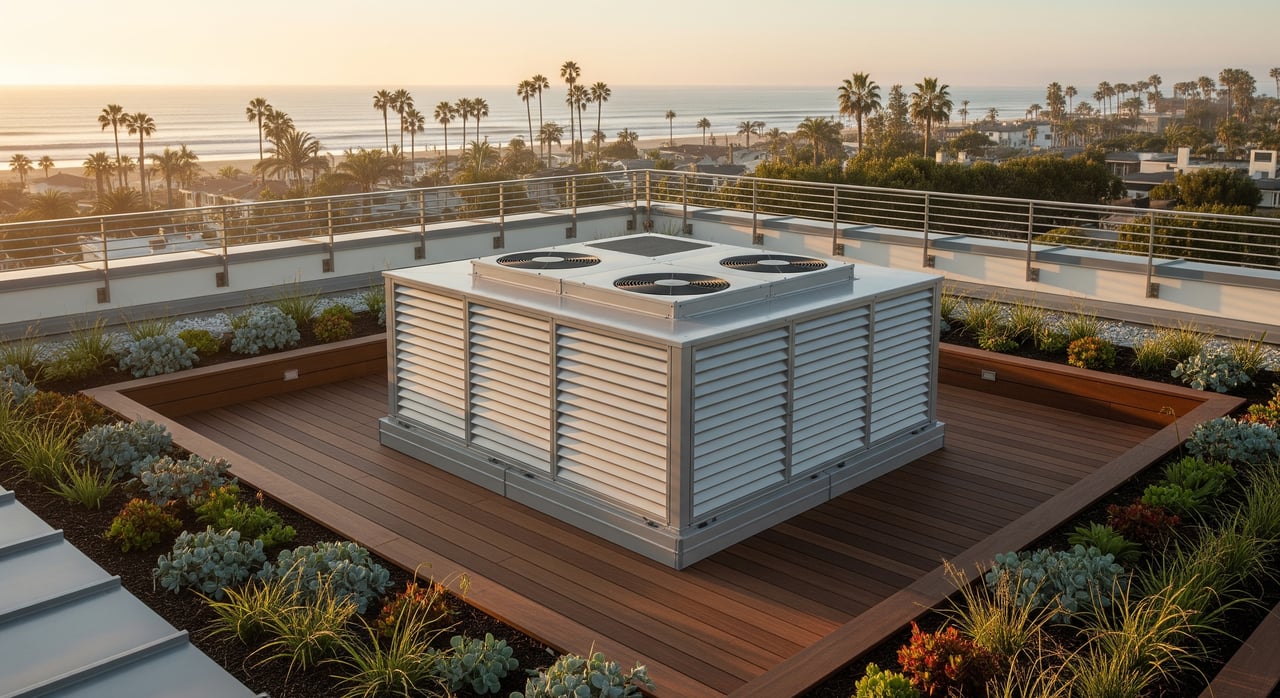
- For roof units, inspect curbs, flashing, and mounts more often since rooftop exposure can accelerate corrosion.
Smart choices and what to avoid
- Choose systems with accessible external components for easier service and lower repair time.
- Position returns and intakes to minimize direct onshore salt ingestion when possible.
- Avoid blanket covers for long periods. Covers can trap moisture unless the unit is truly idle and the cover is used per manufacturer guidance.
- Do not power wash fins. High pressure can bend fins and damage coils.
Inspections, documentation, and costs
How often and what to document
- For Huntington Beach, aim for professional service twice a year, with at least annual service for properties farther inland.
- Keep every receipt and inspection report. File coil cleanings, refrigerant checks, replaced parts, and any coatings or upgrades. A clear service history builds buyer confidence and protects you during negotiations.
Typical costs and how to think about ROI
- Routine biannual service generally costs less over time than emergency repairs. Preventive plans can catch small issues early.
- Coil cleaning is usually modest. Coatings and specialized corrosion treatments add to the cost but can extend coil life. Confirm warranty terms with your technician before applying coatings.
- Replacing small components like fan motors, contactors, and capacitors is a moderate expense compared to major items such as compressors and coils. Upgrading fasteners, brackets, and line‑set insulation is relatively low cost with good coastal ROI.
Visuals to include in your listing or records
- Close‑ups of corroded condenser fins next to a post‑service photo that shows clean, straight fins.
- Side‑by‑side of corroded versus stainless fasteners and brackets.
- A wide shot that shows proper clearance, an elevated pad, and tidy landscaping that does not block airflow.
- Before and after photos of a dirty filter and a clean replacement.
- A photo of a cleared condensate pan and line.
- An annotated image of inspection points on the outdoor unit, including the electrical box, fan, fins, base, refrigerant lines, and insulation.
Quick‑reference checklist (printable)
- Monthly: Check or replace filter; clear debris around the outdoor unit.
- Quarterly: Gentle inside‑out rinse of condenser fins if salt is visible; check and flush the condensate drain.
- Every 6 months: Schedule professional service in spring and fall.
- Annually: Full inspection and tune‑up; document all repairs and receipts.
- Selling: Professional inspection 30–60 days before listing; coil cleaning; replace degraded insulation; swap to stainless fasteners; organize documentation for buyers.
Final thoughts and next steps
With Huntington Beach’s salt‑air exposure, small, steady actions make the difference. A clean filter, a gentle rinse, and biannual service can keep your system efficient, extend its life, and help your home show better. If you are preparing to sell, a tidy outdoor unit and organized service records can set the right tone for buyers and inspectors.
Have questions about which upgrades boost resale value in your neighborhood or how to time pre‑listing maintenance? Reach out to AceEstate for local guidance and a coastal‑smart plan that fits your goals.
FAQs
How often should I service my AC in Huntington Beach?
- For coastal conditions, schedule professional maintenance twice a year, with monthly filter checks and quarterly light rinsing between visits.
Will covering my outdoor unit protect it from salt?
- Not usually; covers can trap moisture and worsen corrosion unless used only when the unit is idle and per manufacturer guidance.
Are coastal HVAC models and coil coatings worth it?
- They add upfront cost but can extend coil and cabinet life in marine environments; review warranty terms and local serviceability before deciding.
Can I clean condenser coils myself?
- You can lightly rinse with low‑pressure water for surface salt, but chemical cleaners and protective coatings should be handled by professionals.
Does distance from the beach change maintenance needs?
- Salt deposition is strongest near the shoreline but can travel inland with wind and topography, so biannual service is still a smart baseline.
What should I show buyers about my HVAC?
- Provide recent service reports, receipts for coil cleaning or part replacements, filter change dates, and photos of a clean, well‑maintained outdoor unit.